
Our Practice Methods
Jade Dragon Martial Arts & Nei Gong
“The Most Comprehensive System of Martial Arts, Internal Arts and Self Mastery Practice Available“
personal training
Take The First Steps Towards Managing Your Stress And Creating Calm
Within our Martial Art curriculum at JDMAA, the first internal art we teach is Xing Ie Chuan. There are some practical reasons for this. First, it is energetically the easiest to develop. The power manifestation is not as nearly complex as that of Tai Chi Chuan or Baguazhang. It also has many aspects that are very helpful with developing internal power that feed incredibly well into the Five Ancestor Fist style. We teach this at proficiency level 12 (equivalent to 2nd degree black sash).
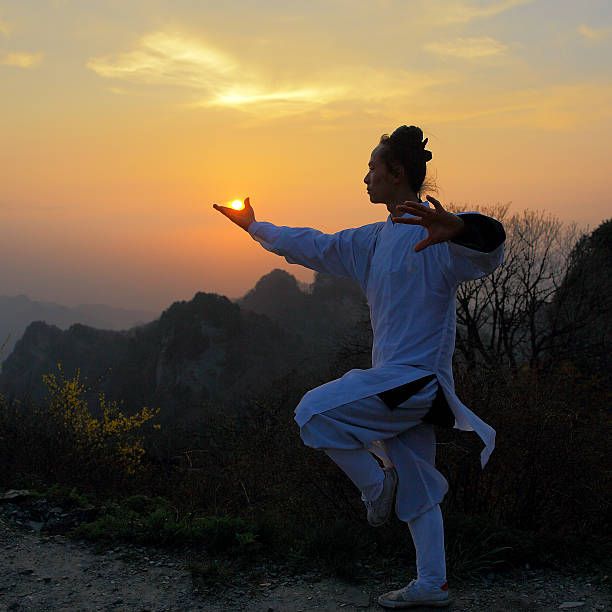
Baguazhang is an amazing internal martial art and internal practice. Literally defined as the eight trigram palm method it employs eight separate palm changes in its practice. However, what is not taught very often is the tremendous internal practice that is employed within this martial art. At JDMAA we teach the complete practice of Baguazhang. This includes ALL of the peripheral training that allows for the development of the necessary internal qualities that make this such an effective martial art as well as an INCREDIBLE internal practice!
Deeper Dive
More Specific Information on Xing Ie Chuan and Baguazhang
Below are some questions & answers we get all the time about Our specific Yang Style practice and how the learning is structured.
Key aspects of Internal Martial Arts:
Qi (Chi) cultivation:
Central to internal arts, Qi is considered the body’s vital energy, which practitioners aim to develop and control through breathing exercises and specific movements.
Relaxation and softness:
Instead of muscle tension, internal arts emphasize deep relaxation to access the body’s full potential and generate power from the core.
Leverage and body mechanics:
Utilizing proper body alignment and leverage to redirect an opponent’s force, allowing a smaller person to overcome a larger opponent.
Mind-body connection:
Internal arts heavily emphasize the connection between the mind and body, requiring focus and awareness during practice.
Pushing Hands practice:
A common training method in internal arts where practitioners practice applying pressure and yielding to an opponent’s force to develop sensitivity and flow.
How it differs from external martial arts:
Focus on power generation:
External martial arts primarily rely on muscular strength and explosive movements to generate power, while internal arts focus on utilizing the body’s natural energy and leverage.
Emphasis on technique over strength:
Internal arts prioritize proper technique and body positioning over brute force, allowing practitioners to effectively defend against stronger opponents.
Examples of Internal Martial Arts:
Tai Chi: Well-known for its slow, flowing movements and emphasis on deep breathing and meditation.
Bagua Zhang: Characterized by circular movements and adaptability to an opponent’s attacks
Hsing-i Quan: Focuses on developing powerful, direct strikes with strong stances
Xing Yi Quan is powerful and effective martial art with origins tracing back to the last days of the Ming Dynasty (around 1644). The art was developed by Ji Long Feng (aka. Ji Ji Ke) who had been a solider in the armies of the Ming Dynasty but found himself without an occupation when the Manchurian Qing Dynasty took control of China. Ji is said to have wandered widely, developing his martial skills, the legend has it that at Zongnan Mountain, near to present day Xian, he inherited the tradition of the famous Song Dynasty General Yue Fei. Whether this story is true or not is a matter of opinion but Ji still went on to develop what was to become today’s martial art of Xing Yi Quan.
In the early 1800s a man named Li Neng Ran (aka. Li Luo Neng) came to Shanxi province and discovered the martial arts of the Dai Family. He went on to learn Xin Yi from the Dai Family and he further developed it, taking it with him on his travels to Hebei Province. At that time, the terms Xin and Xing were used interchangeably, but over time the name Xing Yi Quan (Shape/Character Intention Boxing) came to be used for those that derived their martial arts from Li Neng Ran both in Shanxi province and Hebei, and then later further afield.
Xing Yi in all its forms has a reputation for being a direct and powerful martial art which can be used practically. It historically was associated with weapons and especially with the use of the Da Qiang (Big Spear), which lends itself to strong and forceful offensive techniques. Through the 1800s, Xing Yi became an art sought out by those in Northern China wanting to make their name as martial artists, prize fighters, bodyguards, armed escorts for caravans, local militia men (called Braves) and at times by rebels and bandits. Many of the famous names of Xing Yi were employed as Biaoju – armed caravan escorts – and earned their reputations for protecting valuable goods across Northern China and beyond.
Today, Xing Yi still retains it’s practical aspect and this is something that JDMAA is proud to preserve, with development of necessary internal qualities, principles, applications, weapon work and sparring forming the majority of our practice.
Baguazhang is considered to be the most circular and spiraling system of chinese martial arts (kungfu). Its defining characteristic is constant movement and change, and the ability to fight while being on the move. Where most martial arts engage with an opponent in a head-on fixed position, a bagua fighter can attack or defend while walking and changing direction constantly. The outstanding feature of baguazhang practice is circle walking. Bagua practitionerers will walk in circles during their practice and hold static postures while walking, and practice various martial techniques (palm changes) when changing direction on the circle. Baguazhang has developed into a very complex martial system including a full array of kicks, strikes, throws, grappling and the use of many weapons.
Common features of Baguazhang training are continuous motion, circular footwork, circular or spiraling body motion, complex internal mechanics and fa-jin (power release). The patient and persistent practice of baguazhang develops extreme core strength and supple and strong muscles and tendons. Baguazhang is an internal martial art (neijia) and an internal energy building method (neigung), where the emphasis is on the development of chi/qi. Circle walking while holding static postures is also an effective meditation method.
The fighting charateristic of Baguazhang is the use of clever guerrilla-style tactics. The Bagua fighter uses evasive footwork to escape the opponents strong power and when the time is right the Bagua fighter counters with sudden, ferocious attack, using any part of the body. Footwork and body placement are used to disrupt and unbalance the opponent, creating an opening for an attack. Most martial arts rely on a firmly rooted stance from which to launch an attack, but a Bagua fighter maintains his/her rooting while in motion and can launch an attack at any time, surprising the opponent. Bagua strategy emphasizes constant change in response to the spontaneous and “live” quality of combat.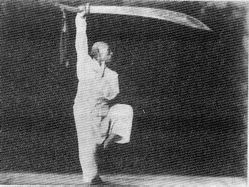 Many distinctive styles of weapons are contained within Baguazhang. Some can be concealed like the “scholar’s pen” or the unique crescent-shaped deer horn knives. Baguazhang is also known for practicing with extremely large weapons, such as the Baguadao or ‘Bagua Broadsword’. Other more conventional weapons are also used like the staff, double-edged straight sword, and spear. Baguazhang practitioners are also known for being able to use anything as a weapon by using the principles of their art.
Dong Haichuan is widely credited as the founder of Baguazhang and most schools of Baguazhang place Dong Haichuan at the beginning of their lineage.
Dong Haichuan was very private about his past and never told his students his exact history. As a child and young man he trained the martial arts of his village intensely. The arts were probably Shaolin-based. He was poor and often got into trouble, but throughout his youth he practiced the martial arts diligently. At some point in his life he received extensive training from a Taoist monk (or monks) who taught him circle walking techniques. According to legend Dong Haichuan spent so much time walking around a tree that eventually the tree’s roots were exposed.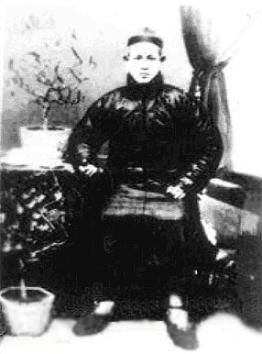 Around 1864 Dong arrived in Beijing and he got a service job at the residence of the prince Su. He worked as a servant and waiter in the prince’s household. Fearing prosecution for transgressions of his earlier days, he kept his fighting skills a secret from the public. During a crowded banquet, however, he caught people’s attention by lightly maneuvering through the banquet-hall packed with guests, and even climbing walls, serving drink and food. The prince recognized that Dong Haichuan must be skilled in martial arts and asked him to perform for him and his guests. Not being able to refuse his master’s wish, Dong Haichuan did as he was asked, impressing the crowd with his performance. The noble’s personal bodyguard – a muslim by the name of Sha Hui-Tsu – saw his position threatened by Dong Haichuan and so he challenged him to a fight. Sha was soundly defeated. Prince Su later appointed Dong Haichuan as head of the bodyguards in the palace and as tax collector, basically the prince’s hard man.
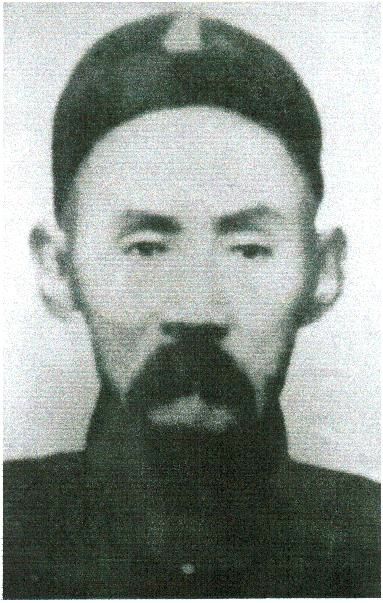 Dong and his top student Yin Fu went to Mongolia to collect taxes for ten years. Upon his return he left the prince’s household and he began to teach publicly, giving up all other occupations to devote himself to developing and teaching Baguazhang. He synthesized his previous experience with village martial arts, travelling fights, Daoist studies, and also the skills he learned as a waiter, to create a unique art originally called Zhuan Zhang (Turning Palms). It was in his public teaching period that the art was given the name Baguazhang (eight tri-gram palm).
In his later years he was poor and lived with Yin Fu’s student Ma Gui. Ma owned a lumber yard and Dong lived on the premises. He died in 1882. Baguazhang had become a well-known fighting style in Beijing and northern China by the late-1800s and Dong Haichuan and his students became famous throughout China. Yin Fu became the bodyguard of the last empress dowager of china, a great honor for a martial artist.
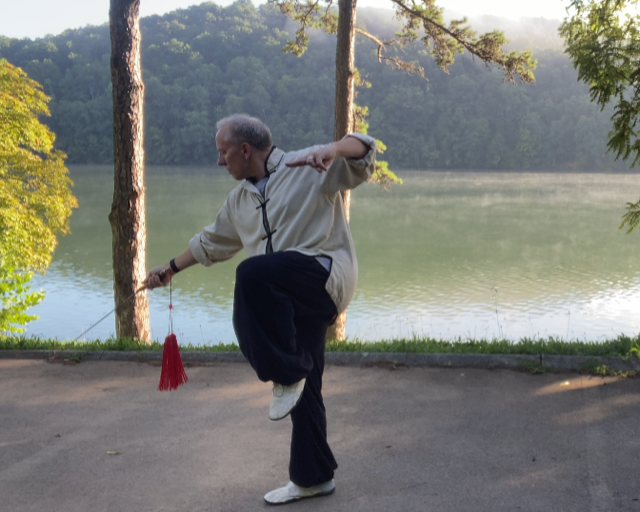
We teach four primary weapons- Staff, Broadsword, Spear and straight sword. We begin weapons training at beginner level 3 because we believe training with weapons enhances all martial skills.
Training with weapons in Chinese martial arts is important because it significantly enhances a practitioner’s overall skill by improving their coordination, balance, power, timing, and awareness of distance, all while adding depth and complexity to their movements, making them more effective in both armed and unarmed combat situations; additionally, it can serve as a way to maintain traditional practices and deepen the understanding of the martial art’s history and philosophy.
(We also teach several other weapons such as the 9 section Chain Whip, Chinese Sai, Daggers and others. However, those will be taught outside of the core curriculum for those that wish to learn them.)
our classes
Three Paths to Learning… Pick the one that works best for you
You have three separate pathways of learning… In person Classes, Private Lessons and the Jade Dragon Online Academy!

In person Classes
JDMAA and SynerG Coaching and Wellness is based out of Lenoir City TN. We offer weekly Martial Art classes in Lenoir City TN and in Farragut TN. Our classes provide a complete Martial Arts practice that includes all of the Shaolin Five Ancestor Fist curriculum (and more), Quin na and self defense and a variety of training methods to create a strong, supple and energetic body.
As an in person student, you will also gain access to the online courses that follow the precise curriculum in the same order you are learning it live. This becomes a great resource for you as you practice on your own.
Private/Semi-private Class
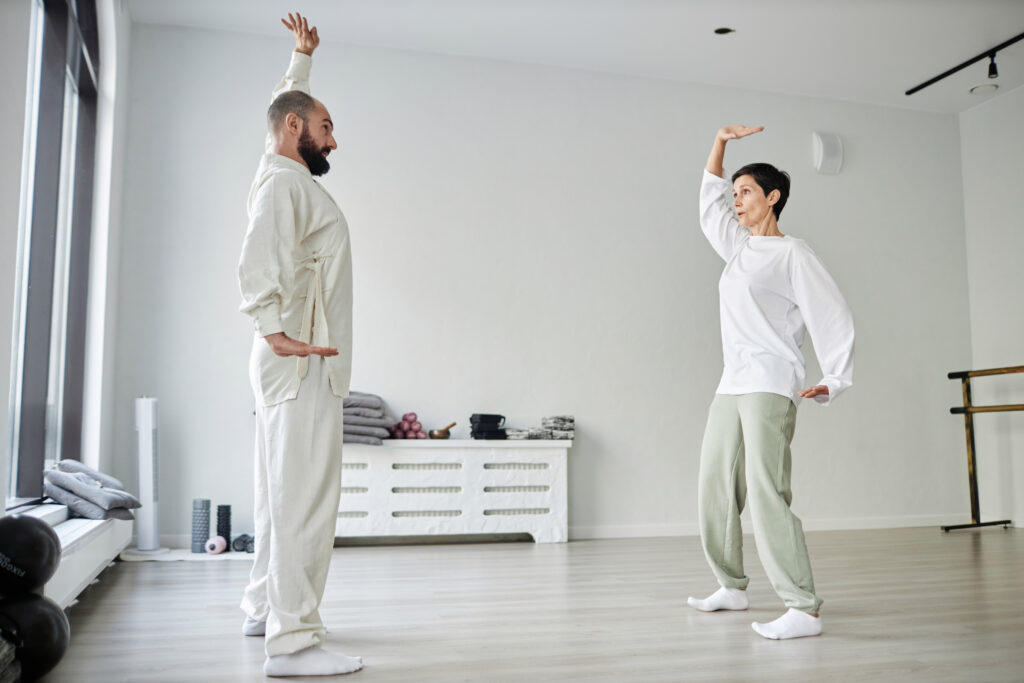
I also offer private learning for those who prefer learning at your own pace and prefer a tailored curriculum. Our classes provide a complete Martial Arts practice that includes all of the Shaolin Five Ancestor Fist curriculum (and more), Quin na and self defense and a variety of training methods to create a strong, supple and energetic body.
As an in person student, you will also gain access to the online courses that follow the precise curriculum in the same order you are learning it live. This becomes a great resource for you as you practice on your own..
Jade Dragon Online Academy
We offer four different online Academies that offer continual learning in our primary curriculums. You can join one or multiple academies at a time. The academies are:
Tai Chi Academy
Neigong/Qigong Academy
Bagua/Xing Ie Academy
Martial Arts Academy
To Learn more about each Academy click the button Below.
online Training
The Foundation of any traditional chinese practice…
Is the Muscle Changing Classic or the Yi Jin Jing.
The Muscle Changing Classic is One of the most important practices we teach at SynerG Coaching as well as The Jade Dragon Martial Arts Academy. This practice is NOT the 13 posture Qigong set (although that is part of our curriculum). It is a comprehensive practice that involves a complete transformation of your body into an efficient and energetically active machine. In this video I will take you step by step into how the process of the Muscle Changing Classic Works. I will also discuss the incredible benefits in terms of your strength, wellness, vitality and most importantly your Longevity.
The Jade Dragon Martial Arts Academy online
Learn more about the JDMAA! And how you can become a student.